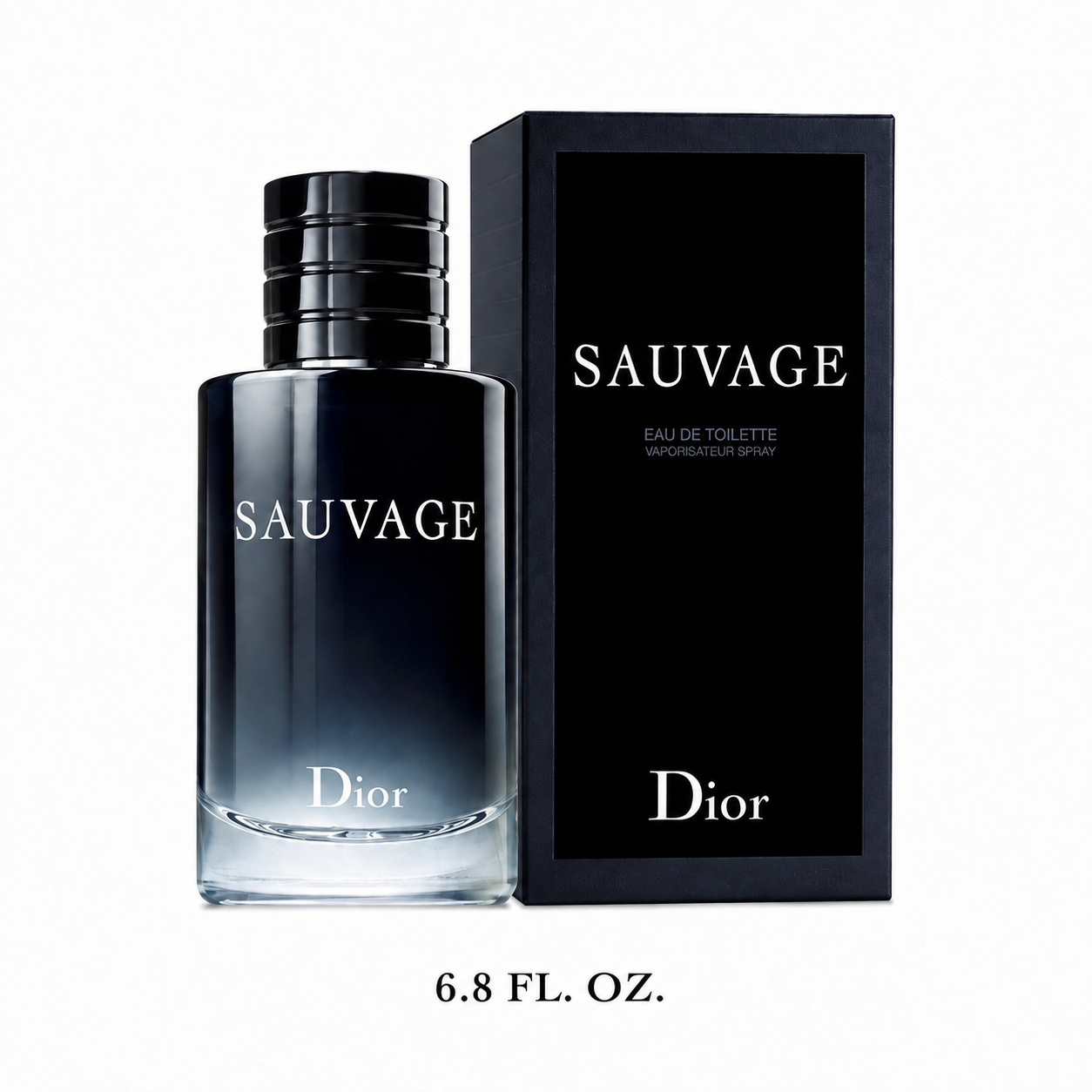
The similar bottles make these two Sauvage versions easy to confuse. The useful question is how their different scent directions fit your taste. This guide draws on Dior’s published descriptions and offers our shopping suggestions; it is not a comparative wear test. The cover is a conceptual illustration.
| Fragrance | Scent direction | Consider it for | Before choosing |
|---|---|---|---|
| Sauvage Eau de Toilette | Citrus, pepper and ambery woods | A fresher, spice-led starting point | Try first if peppery openings feel sharp to you. |
| Sauvage Eau de Parfum | Bergamot with a warm vanilla direction | Freshness paired with more vanilla depth | Choose for its character, not just its concentration label. |
What changes between Sauvage EDT and EDP?
Dior presents the Eau de Toilette around bergamot, peppery freshness and ambery woods, including ambroxan. Its Eau de Parfum pairs bergamot with a vanilla accord. That contrast is a more useful starting point than assuming both bottles contain exactly the same fragrance at different strengths.
Think about your existing favorites. Do you reach for brisk, spice-led scents, or do you enjoy a warmer finish? Use that preference to decide which version to sample first. A note list helps narrow the search, but it cannot predict your personal response to the finished fragrance.
Which would you wear more often?
Picture a normal week rather than a special occasion. If you want one bottle for regular use, choose the character you would enjoy repeatedly. Our editorial suggestion is to start with EDT for a citrus-and-spice preference and to compare EDP when vanilla warmth is part of the appeal.
Neither bottle is restricted to daytime or evening. In shared spaces, application and other people’s preferences matter too. For a gift, finding out which exact version the recipient already wears is more useful than choosing the one with the higher price.
Does EDP automatically mean better performance?
A concentration label alone does not establish how a fragrance will wear on every person. We have not run a controlled side-by-side test, so this guide does not promise a fixed number of hours or name a longevity winner.
If you can sample both, compare them on separate days under similar conditions. Notice whether you still enjoy the fragrance after the opening, how comfortable it feels in your usual surroundings and whether you want to wear it again. Keep your application consistent so the comparison is useful.
Read the full version name before choosing a bottle
Check for “Eau de Toilette” or “Eau de Parfum” on the selected product. Sauvage Parfum and Sauvage Elixir are additional versions, while Eau Sauvage is a different fragrance name. Searching only for “Dior cologne” leaves too much room for a mismatch.
Compare the same capacity and format when weighing prices. A refill and a spray bottle are different purchases, and a larger bottle is only good value if you will use it. Confirm the selected option rather than judging capacity from the bottle photograph.
Ready to compare the available bottle?
Our linked listing is Sauvage Eau de Toilette. Open it to check the current size options, availability and price. The EDP discussion above is a comparison, not a claim that we currently stock that version.
Before payment, review the order total, shipping information and return terms. If you already know you enjoy EDT, checking those practical details is the next step. If you are choosing your first Sauvage, sampling the exact version can help you avoid buying a bottle you will not reach for.